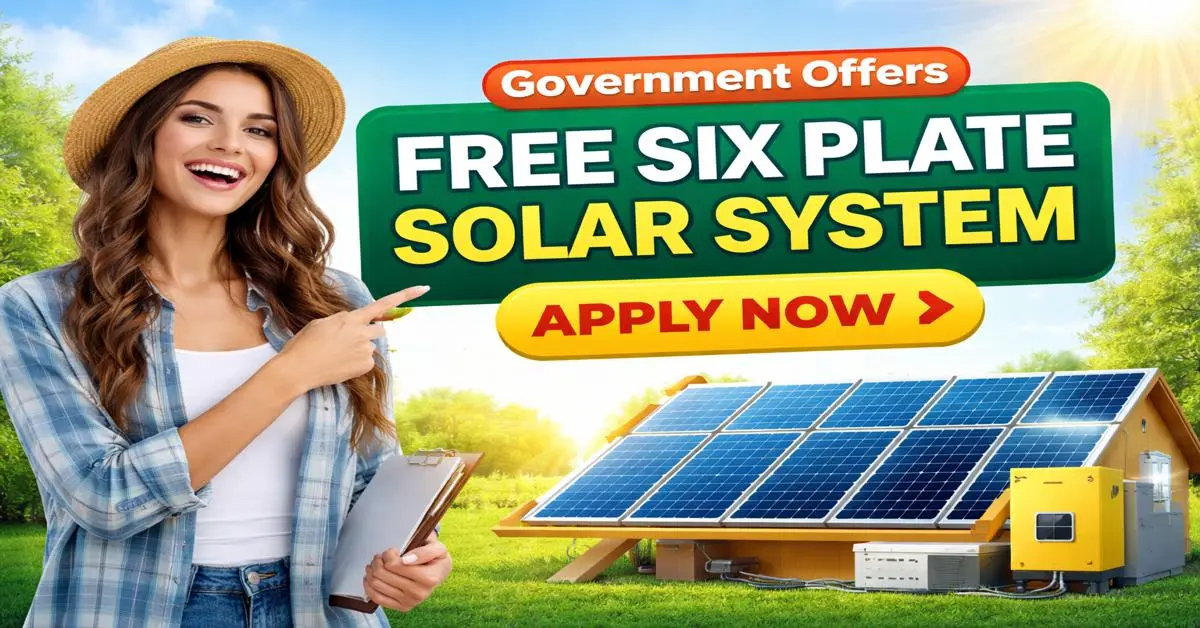
Government Launches Free Six-Plate Solar System – 2026 Energy Relief for Households
Electricity bills have become a serious burden for many families in Pakistan. Every month, households worry about rising tariffs, long power outages, and the stress of paying expensive bills.
That’s why the announcement that the government launches a free six-plate solar system in 2026 has generated excitement and relief nationwide.
This initiative aims to provide free solar panels to low-income households, helping them generate their own electricity and reduce dependence on the national grid. For families struggling with high power costs, this program could truly be a life-changing opportunity.
Let’s break down everything you need to know about the scheme in a simple and friendly way.
Also read about Punjab Expands Apni Chhat Apna Ghar for Joint Families
Quick Overview of the Solar Scheme
| Program Detail | Information |
| Program Name | Free Six-Plate Solar System Scheme |
| Announcement | Government Launches Free Six-Panel Solar System Initiative |
| Year | 2026 |
| Target Beneficiaries | Low-income households |
| System Capacity | Six solar panels per household |
| Main Goal | Reduce electricity costs and load shedding impact |
| Support Type | Free solar panel installation |
| Benefit | Clean, renewable electricity |
Why the Government Introduced This Solar Program
Pakistan has faced a severe energy crisis for years. Power shortages, high electricity costs, and rising fuel costs have placed significant pressure on families.
Recognizing these challenges, the government decided to invest in renewable energy solutions.
The initiative, where the government launches a free six-plate solar system, aims to:
- Reduce electricity bills for poor households
- Promote clean and renewable energy
- Decrease pressure on the national electricity grid
- Support sustainable energy development
This program reflects a growing focus on solar energy adoption across the country.
What Is a Six-Panel Solar System?
A six-plate solar system is a small home solar setup that includes six photovoltaic panels.
These panels capture sunlight and convert it into electricity.
| Component | Description |
|---|---|
| Solar Panels | Six photovoltaic panels to capture sunlight |
| Solar Inverter | Converts solar energy into usable electricity |
| Battery Storage | Stores electricity for night use or load shedding |
| Wiring & Mounting | Equipment needed for installation and system stability |
Key components usually include:
- 6 solar panels
- Solar inverter
- Battery storage system
- Wiring and installation equipment
Although it is a small system, it can easily power essential home appliances.
Appliances You Can Run with the Solar System
The system provided under the government’s Free Six-Plate Solar System program can support several daily household needs.
| Appliance | Usage |
|---|---|
| LED Lights | Provide efficient lighting for home |
| Ceiling Fans | Keep rooms cool during hot weather |
| Mobile Chargers | Charge phones and small devices |
| Television | Run small LED TV |
| Internet Router | Support basic internet connection |
Typical appliances include:
- Energy-saving LED lights
- Ceiling fans
- Mobile phone chargers
- Small televisions
- Internet routers
For many households, this means access to basic electricity during load shedding, which can significantly improve daily life.
Who Is Eligible for the Program?
Not everyone qualifies for the scheme. The government has set specific eligibility requirements.
| Eligibility Requirement | Details |
| Income Level | Must belong to a low-income household |
| Electricity Usage | Typically low monthly electricity consumption |
| CNIC | Valid CNIC required |
| Property Status | Must own or live in a registered household |
| Priority Groups | Poor families and welfare program beneficiaries |
These criteria ensure that support reaches those who need it most.
Also read about Active Nigehban Card PIN 2026

How to Apply for the Solar Scheme
Applying for the program where the government launches a free six-plate solar system is designed to be simple and accessible.
| Step | Process |
|---|---|
| Step 1 | Visit the official government portal |
| Step 2 | Register with CNIC and personal information |
| Step 3 | Provide electricity bill details |
| Step 4 | Submit required verification documents |
| Step 5 | Wait for approval and installation schedule |
Step-by-Step Application Process
- Visit the official government registration portal.
- Register using your CNIC and household details.
- Provide electricity bill information.
- Submit your application for review.
- Wait for verification and approval.
After approval, a technical team may visit your home for a solar installation assessment.
Real-Life Example: How Solar Panels Can Change Lives
Imagine a small household in a rural village where electricity outages last several hours each day.
Before the government launched the free six-plate solar system initiative, the family relied on candles or battery-powered lights.
Now, with solar panels installed, they can run lights, charge phones, and even power a fan during hot nights.
For them, this program is not just about energy—it’s about comfort, dignity, and hope.
Environmental Benefits of Solar Energy
Apart from helping families financially, the scheme also supports the environment.
| Impact Area | Benefit |
|---|---|
| Carbon Emissions | Reduction in environmental pollution |
| Fossil Fuel Use | Less reliance on oil and gas power plants |
| Renewable Energy | Encourages solar energy adoption |
| Sustainable Development | Promotes green and clean energy future |
Major environmental advantages include:
- Reduced carbon emissions
- Less dependence on fossil fuels
- Promotion of clean, renewable energy
- Sustainable electricity generation
Programs like this encourage communities to move toward a greener future.
Challenges the Program May Face
While the government’s launch of the free six-plate solar system initiative is promising, some challenges may arise.
Possible issues include:
- High demand exceeding available solar units
- Installation delays
- Maintenance concerns in remote areas
Despite these challenges, experts believe the program could significantly transform Pakistan’s energy landscape.
Future Expansion Plans
Energy analysts expect the government to expand solar initiatives in the coming years.
Possible future steps may include:
- Increasing the number of solar panels per household
- Expanding the program to more provinces
- Introducing community solar grids
If these plans succeed, Pakistan could become a regional leader in solar adoption.
Also read about Apply for Ramzan Rashan Program 2026
Final Thoughts: Government Launches Free Six-Panel Solar System Initiative
The decision to launch a free six-panel solar system represents a powerful step toward energy independence and financial relief for thousands of households.
For families struggling with rising electricity costs and unreliable power supply, this initiative could make a meaningful difference.
Beyond financial benefits, the program also promotes clean energy, environmental sustainability, and a brighter future for communities. If implemented successfully, this scheme could become one of the most impactful renewable energy programs in Pakistan’s history.
